
KENYA PHOTO SAFARI
The Great Migration | August 2028
This Kenya photography tour gives the Great Migration five nights in the Masai Mara: three at a camp on the Mara River and two in the Mara Triangle.
We start in Nairobi and drive south to Amboseli National Park, known for its large elephant herds and its views of Mount Kilimanjaro. A flight takes us to the Masai Mara: three nights at a camp on the Mara River, then two in the Mara Triangle, the part of the reserve west of the river. We finish at Lake Naivasha, with a boat outing on the lake and a full day in Lake Nakuru National Park.
The wildebeest and zebra herds are usually in the Mara from July to October, and August is in the middle of that season. The Mara is also known for its lions, cheetahs and leopards. River crossings happen on the herds’ schedule, so we give them time: five nights, with game drives morning and afternoon.
Join our Kenya photo safari and photograph the Great Migration with a group of nine or fewer.


Trip Type
Photo Safari

Starts in
Nairobi (NBO)

Day One
August 5, 2028

Group Size
5 - 9 Participants

Activities
Wildlife, Nature, Landscapes

Ends in
Nairobi (NBO)

Last Day
August 15, 2028

Fitness
Relaxed

Details
When: August 5 to 15, 2028 (11 days, 10 nights)
Price: $12,995 per person, double occupancy
Single Room Supplement*: $1,895
Deposit: $1,495 US Dollars to secure your spot.
Balance: Due 90 days before departure (May 7, 2028). Full terms and conditions in FAQ.
Who: Photographers of all levels. Non-photographer spouses and partners are welcome.
Group Size: Minimum 5 People, Maximum 9 People.
Where: This photo tour starts and ends in Nairobi, Kenya (NBO).
Fitness Level: Relaxed. Most of our time is spent seated in safari vehicles on game drives. Tracks in the parks are bumpy, and there are short walks around the lodges and camps.
The tour is open to all levels of photographic skills, from beginner to experienced. However, there will be no formal workshops or critiques. We will share knowledge and skills along the way in the spirit of real adventurers.
Tour prices are set for double occupancy, so unless you travel with a friend or spouse, you'll need the single supplement. If you're traveling alone and choose not to book a single supplement, we'll do our best to pair you with another participant who also seeks to share. Roommate pairings are not guaranteed; we'll always pair you with someone of the same gender. The single supplement fee will apply if we can't make a match.
Why join a photo tour to Kenya for the Great Migration?
Every year more than a million wildebeest, along with zebra and gazelle, move north from the Serengeti into Kenya's Masai Mara, usually between July and October. The herds have to cross the Mara River, and the big cats are never far from them. For a wildlife photographer there is something to point a lens at in every direction.
The Mara is the center of this trip, and the route around it adds range to what you bring home. Amboseli is known for large elephant herds, with Mount Kilimanjaro behind them when the mountain is clear. Lake Naivasha gives us hippos and water birds from a boat. Lake Nakuru National Park is a rhino sanctuary, home to both black and white rhino and to Rothschild's giraffe.
August is in the dry season. Mornings are cool, the grass is short, and animals gather near water, which makes them easier to find and to photograph.
Our tour
Five nights in the Mara, in two places. We spend three nights at Ashnil Mara Camp, on the Mara River inside the main reserve and close to several of the crossing points the herds use. Then we move for two nights to Mara Serena Safari Lodge in the Mara Triangle, the part of the reserve west of the river. The Triangle is managed separately by the Mara Conservancy and has only two places to stay inside it. August is the busiest time of year in the Mara, and at a crossing we will be sharing the riverbank with other vehicles. Splitting our nights gives us two different areas to work.
Nine guests at most. We travel in private 4x4 Land Cruisers with pop-up roofs and our own English-speaking driver-guides, with a maximum of four guests per vehicle. For game drives from our Mara River camp we use the camp's open-sided 4x4 vehicles.
An easy pace. After the first night in Nairobi we stay at least two nights everywhere, and we fly from Amboseli to the Mara.
Time for photography. Game drives run in the morning and the afternoon, when the light is at its best, with a break at the lodge in the middle of the day. Daniel is with the group for the whole trip.
Full Itinerary
This plan stays flexible. The herds move with the grass and the rain, and nobody can say months ahead where they will be on a given day. When a crossing is building or a cheetah is hunting, we stay with it, and the rest of the day moves accordingly.
Day 1 | Arrive in Nairobi | August 5, 2028
We meet you on arrival at Jomo Kenyatta International Airport (NBO) and take you to our hotel near the airport, where you can rest after the flight.
Meals: Not included on arrival day Accommodation: Argyle Grand Hotel or similar (Nairobi, 1 night)
Day 2 | Nairobi to Amboseli National Park | (B, L, D)
After breakfast we drive south to Amboseli National Park. Our lodge is inside the park, so after lunch we go straight out on our first game drive. Amboseli is known for its large elephant herds, and we will look for them against Mount Kilimanjaro and feeding around the swamps.
Meals: Breakfast, Lunch, Dinner Accommodation: Ol Tukai Lodge or similar (Amboseli, 2 nights)
Day 3 | Amboseli National Park | (B, L, D)
Morning and afternoon game drives in the park. Kilimanjaro is most often clear early in the day, so we start early. Besides elephants, Amboseli is home to lion, cheetah, buffalo, giraffe, zebra, wildebeest and hippo, and more than 400 species of birds have been recorded here.
Meals: Breakfast, Lunch, Dinner Accommodation: Ol Tukai Lodge or similar
Day 4 | Fly to the Masai Mara | (B, L, D)
After breakfast we drive to the airstrip for our flight to the Masai Mara. We are met on landing and taken to our camp on the Mara River. After lunch we head out on our first game drive in the reserve and stay out until sundown.
Meals: Breakfast, Lunch, Dinner Accommodation: Ashnil Mara Camp or similar (Masai Mara, 3 nights)
Day 5 | Masai Mara National Reserve | (B, L, D)
A full day in the reserve with morning and afternoon game drives. Our camp is close to several of the crossing points on the Mara River. Some days that means waiting near the river while the wildebeest decide whether to cross. Other days it means looking for the lions, cheetahs and leopards the Mara is known for.
Meals: Breakfast, Lunch, Dinner Accommodation: Ashnil Mara Camp or similar
Day 6 | Masai Mara National Reserve | (B, L, D)
A second full day in the reserve, shaped by what we found the day before. The optional hot-air balloon flight goes on one of our full mornings in the Mara. Balloon guests have breakfast after landing and rejoin the group’s game drive.
Meals: Breakfast, Lunch, Dinner Accommodation: Ashnil Mara Camp or similar
Day 7 | To the Mara Triangle | (B, L, D)
We check out and take a morning game drive on our way to the Mara Triangle, the part of the reserve west of the Mara River. It lies between the river and the Oloololo Escarpment and is managed separately by the Mara Conservancy. Our lodge sits on a hill inside the Triangle, looking out over the plains toward the river.
Meals: Breakfast, Lunch, Dinner Accommodation: Mara Serena Safari Lodge or similar (Mara Triangle, 2 nights)
Day 8 | Mara Triangle | (B, L, D)
Our last full day in the Mara, with morning and afternoon game drives in the Triangle. We use them for whatever the group still wants: more time at the river, big cats, or wide landscapes with the herds and the escarpment.
Meals: Breakfast, Lunch, Dinner Accommodation: Mara Serena Safari Lodge or similar
Day 9 | Masai Mara to Lake Naivasha | (B, L, D)
We leave the Mara by road for Lake Naivasha in the Great Rift Valley. On the way we visit a Maasai village to meet the women of the community and hear about their traditions. We arrive at Lake Naivasha in time for lunch, and later in the afternoon we go out on the lake by boat toward sunset. Naivasha is a shallow freshwater lake known for its large hippo population and for birds such as fish eagles, pelicans and cormorants.
Meals: Breakfast, Lunch, Dinner Accommodation: Lake Naivasha Sopa Resort or similar (Lake Naivasha, 2 nights)
Day 10 | Lake Nakuru National Park | (B, L, D)
After an early breakfast we leave for a full day in Lake Nakuru National Park. The park was Kenya’s first rhino sanctuary and one of the most reliable places in Kenya to see both black and white rhino. It is also home to Rothschild’s giraffe, buffalo and a long list of birds. Flamingo numbers rise and fall with the water level, so we take them as a bonus when they are there. We have lunch at a lodge inside the park, go out again in the afternoon, and return to Lake Naivasha for the night.
Meals: Breakfast, Lunch, Dinner Accommodation: Lake Naivasha Sopa Resort or similar
Day 11 | Lake Naivasha to Nairobi and departure | (B, D) | August 15, 2028
After breakfast we drive back to Nairobi, where a day room is waiting so you can shower, repack and rest. We share a farewell dinner and then take you to the airport for your flight home. Please book a flight that leaves Nairobi at night. If you would rather fly the next day, you can add a night in Nairobi.Meals: Breakfast, Dinner Accommodation: Day room in Nairobi
The price of the tour includes:
10 nights of accommodation, double occupancy
Meals as listed in the itinerary
Soft drinks with meals
Tour leader Daniel Korzeniewski with the group throughout
Private 4x4 Land Cruisers with pop-up roofs and English-speaking driver-guides, maximum four guests per vehicle
Open-sided 4x4 camp vehicles for game drives from our Mara River camp
Flight from Amboseli to the Masai Mara
All park, reserve and conservancy entry fees
Boat outing on Lake Naivasha
Full day in Lake Nakuru National Park
Maasai village visit
Day room in Nairobi on the last day and farewell dinner
Airport meet and greet and all transfers in the itinerary
Bottled water throughout the safari
Emergency evacuation cover within Kenya (evacuation only; medical and hospital costs are for your travel insurance)
The price does not include:
International flights to and from Nairobi.
Kenya electronic travel authorization (eTA)
Travel insurance — mandatory for all participants. We recommend RoamRight.
Alcoholic drinks
Tips for guides, drivers and camp staff
Personal expenses such as laundry, phone calls and souvenirs
Meals not listed in the itinerary.
Optional hot-air balloon flight over the Masai Mara ($650 per person)
Extra nights in Nairobi before or after the tour ($175 per person per night)

Tour Leader
Daniel Korzeniewski
Photography is more than a passion for Daniel; it’s a golden opportunity to document the world and share unique cultures with people across the globe. Embarking upon his creative path at the age of 17, he has since shot assignments, commercial work, and lifestyle campaigns.
However, his primary focus is on travel and landscape photography. Daniel led photo tours in Morocco, India, Peru, Cuba, and Vietnam during the last few years.
Daniel is fluent in both Spanish and English.
FAQ
-
This tour is for photographers who want real time with the Great Migration: five nights in the Masai Mara, in a group of nine or fewer, with Amboseli before it and Lake Naivasha and Lake Nakuru after it. You are welcome at any level of experience, and non-photographer partners enjoy it just as much. If long lenses and early mornings sound like a good vacation, you will fit right in.
-
Kenya is a well-established travel destination with a functioning tourism infrastructure and a long history of hosting international visitors. The parks and reserves on this itinerary — Amboseli, the Masai Mara, Lake Naivasha and Lake Nakuru — are all areas with decades of experience welcoming travelers safely. Standard precautions apply as they would anywhere. We travel as a private group throughout, which adds an additional layer of ease and security. Our local guide and drivers know this territory well and manage all in-country logistics from the moment you arrive.
-
This is a relaxed tour. Game drives are seated and you photograph from the vehicle. Park tracks are bumpy, days start early, and there are short walks at the lodges and camps. The flight from Amboseli to the Mara is on a small aircraft.
-
Kenya has several health considerations worth preparing for in advance of your trip.
Malaria is present in all the areas we visit. We strongly recommend consulting your doctor or a travel medicine specialist about prophylaxis at least four to six weeks before departure. Options include Malarone, Doxycycline, and Lariam — your physician can advise on what suits you best. In addition to medication, bring insect repellent with DEET, long sleeves and trousers for evenings, and consider a travel mosquito net if you are particularly sensitive.
Yellow fever vaccination may be required depending on which countries you are traveling from or through before Kenya. Check current requirements for your specific itinerary with your doctor or the Kenyan embassy in your country.
Routine vaccines should be up to date. Hepatitis A, Typhoid, and Tetanus are commonly recommended for travel to East Africa. Consult a travel medicine specialist for current guidance.
Bring an adequate supply of any personal medications, copies of your prescriptions, and a brief doctor's letter if relevant. Medical facilities in the parks are limited, so having everything you need on your person throughout the safari is important.
-
Kenya in August calls for layers in neutral colors and a camera kit built around a long lens.
Clothing:
Neutral-colored shirts and pants (khaki, olive, tan)A fleece or light down jacket and a windbreaker for early drivesA warm hat and a sun hatComfortable closed shoes
Photography gear:
A telephoto zoom in the 100-500mm or 200-600mm range
A second camera body with a mid-range zoom, so you can leave the long lens mounted
A wide-angle lens for Amboseli, the herds on the plains and the Rift Valley
Plenty of memory cards and spare batteries
A blower and a cloth, and a light cover for your camera on dusty tracks
Personal:
Sunscreen, sunglasses and lip balm
Binoculars
A soft-sided bag for the flight to the Mara
-
Most international visitors require an Electronic Travel Authorisation (eTA) to enter Kenya. It is obtained online before departure, straightforward to complete, and valid for 90 days. The process typically takes a few days, so apply well before your travel date.
Your passport must be valid for at least six months beyond your planned departure date from Kenya, with at least two blank pages available for entry stamps.
Keep a copy of your passport and eTA stored separately from the originals throughout the trip. We will provide full entry requirement details and links in your pre-trip information pack.
-
Yes — travel and medical insurance, including emergency medical evacuation coverage, is mandatory for all participants. Medical facilities inside Kenya's national parks and reserves are limited, and evacuation from remote areas requires specialist resources. This is not optional.
We recommend and partner with RoamRight.
Purchase your insurance as soon as your spot is confirmed to protect your deposit and any pre-trip costs.
-
The currency in Kenya is the Kenyan Shilling (KES). US dollars are widely accepted at safari camps, lodges, and for tipping, and are generally the most practical foreign currency to carry.
ATMs are available in Nairobi and in larger towns. We recommend withdrawing cash or exchanging currency before entering the parks, as there are no banking facilities in the parks. Most lodges accept major credit cards for incidentals, but cash is essential for tips and personal purchases.
Tipping is customary in Kenya and expected by guides and camp staff. As a general reference: safari guides USD $15 to $20 per day, camp staff USD $5 to $10 per day, drivers USD $5 to $10 per day. This is at your discretion.
The tour includes all meals, park fees, and activities as listed, so your main out-of-pocket expenses will be tips, alcoholic beverages, and any personal items.
-
We chose comfortable, well-run lodges and camps in the right locations for photography.
Nairobi: Argyle Grand Hotel, near the airport (1 night)Amboseli National Park: Ol Tukai Lodge, inside the park (2 nights)Masai Mara National Reserve: Ashnil Mara Camp, a tented camp on the Mara River (3 nights)Mara Triangle: Mara Serena Safari Lodge, on a hill inside the Triangle (2 nights)Lake Naivasha: Lake Naivasha Sopa Resort (2 nights)
If a property becomes unavailable we will use one of a similar standard.
-
Safari camp food in Kenya is consistently good and often genuinely impressive given the locations. Camps take hospitality seriously, and meals are a proper sit-down affair — breakfast before the morning drive, lunch back at camp, dinner under the stars.
Expect fresh produce, local proteins, a mix of East African and international dishes, and strong coffee. Dietary restrictions are well accommodated at all the properties on this itinerary — let us know at the time of booking and we will confirm arrangements in advance.
All breakfasts, lunches, and dinners as listed in the itinerary are included in the tour price, along with non-alcoholic beverages. Alcoholic drinks are available at the camps and billed separately.
-
Coverage varies across the itinerary. In Nairobi, mobile and Wi-Fi service is reliable. In the parks and camps, service is patchy in some places and absent in others. If you plan to stay connected, a local Kenyan SIM card purchased at the airport in Nairobi is the most cost-effective option. Major carriers include Safaricom (the most widely used and recommended) and Airtel. Most lodges provide Wi-Fi in common areas, though speeds vary. Let family and friends know before you leave that you may be offline for stretches of the safari.
-
Kenya uses 240V at 50Hz. The standard plug type is Type G — the same three-pin rectangular format used in the UK. Travelers from North America will need both a plug adapter and, for devices that are not dual voltage, a voltage converter.
Most modern electronics — laptops, camera chargers, phone chargers — are dual voltage (100-240V) and only need a plug adapter. Check the label on your devices before you go.
All lodges and camps on the itinerary provide standard power outlets. Bring a multi-port USB charger to keep batteries topped up overnight, and consider a small power bank for full days in the field.
-
1) Booking procedure:
All prices for the tours are quoted in US Dollars.
We require a deposit to reserve a place on the selected photo tour. The deposit is due at the time of booking and can be paid online via credit card; ACH and Debit Cards are also accepted.
Other than the deposit, you must complete the registration form for you and your guests, if any.
If you are traveling solo and want to share a room, we will try our best to find you a match. However, if, for any reason, we don't find a suitable match, the single supplement fee will apply.
We will email you shortly after confirming your booking. Please do not book your flights at this time unless otherwise indicated by us. We will email you once the minimum number of guests to run the tour has been reached.
2) Balance of Payments:
The final payment for the trip is 90 days before departure. Such payment shall be made via credit card or wire transfer. Failure to meet the payment schedule will result in cancellation and forfeit of the deposit.
3) Cancellations and Refunds:
If DAK Photography Inc. must cancel the trip for any reason, 100% of paid deposits will be fully refunded. We reserve the right to cancel any trip/tour/group due to insufficient registration at any time. In the event of such cancellation, those with reservations shall be notified as soon as possible, and a full refund of the trip payment will be given.
Please note that deposits are non-refundable. However, they may be applied as a credit toward a future trip with us, provided the credit is used within 12 months of the original trip's start date.
If a guest needs to cancel, we must receive written notification. Email is accepted.
The following cancellation fees apply:
120 days or more before departure: no charge.
61 days to 119 days before departure: 50% of the tour fee.
60 days or less before departure: 100% of the tour fee.
In the event that you have to cancel, we will do our best to fill your spot. If we do so, we will refund 100% of the tour fee minus an administrative fee of $250.
Refunds will not be made for any other costs you may have incurred as a result of your booking.
Travel and medical insurance, including emergency evacuation coverage, are mandatory for all participants. To safeguard your investment, we strongly recommend purchasing this coverage as soon as your trip is confirmed. We also encourage you to select an insurance policy that covers non-refundable deposits and other pre-trip expenses in case of unforeseen cancellations.
All refunds will be processed within 30 days of receiving written confirmation of your cancellation.
-
The herds are usually in the Masai Mara from July to October, and August is in the middle of that window. It is also dry season, with short grass, cool mornings and animals gathered near water. The exact timing of the migration changes every year with the rains, which is why our Kenya photography tour stays five nights in the Mara and splits them between two parts of the reserve.
-
We give ourselves every chance, and nobody can promise one. Crossings depend on the herds, the rain and the river, and the timing changes every year. Our first camp is close to several of the crossing points, and we have morning and afternoon drives across five days to be in the right place. Whatever the river does, the herds are on the plains, and the Mara is known for its lions, cheetahs and leopards all year.
-
August is the busiest time of year in the Mara, and at a river crossing you will see many other vehicles. That comes with the migration. We spend two of our five nights in the Mara Triangle, which is managed separately and has only two places to stay inside it, and we keep the group to nine guests at most.
-
August is in the dry season and one of the cooler months in Kenya. In the Masai Mara, expect early mornings around 54°F (12°C) and afternoons around 77°F (25°C). It is mostly dry and sunny, though a shower is always possible. Early game drives are chilly until the sun is up, so layers are the way to dress.
-
The flight from Amboseli to the Masai Mara is on a small aircraft with limited space, so luggage has to be in soft-sided bags. We will send the exact weight allowance with your pre-trip information, well before you pack.
-
Yes. The balloon flight is an option at $650 per person, on one of our full mornings in the Mara. You have breakfast after landing and rejoin the group's game drive. You can add it when you book.
-
Yes. Extra nights in Nairobi are $175 per person per night, before or after the tour, and you can add them when you book. Arriving a day early gives you time to rest after a long flight. The tour ends with an evening transfer to the airport on August 15, so a night after the tour is there for anyone who prefers to fly the next day.
Ask us a question about this tour
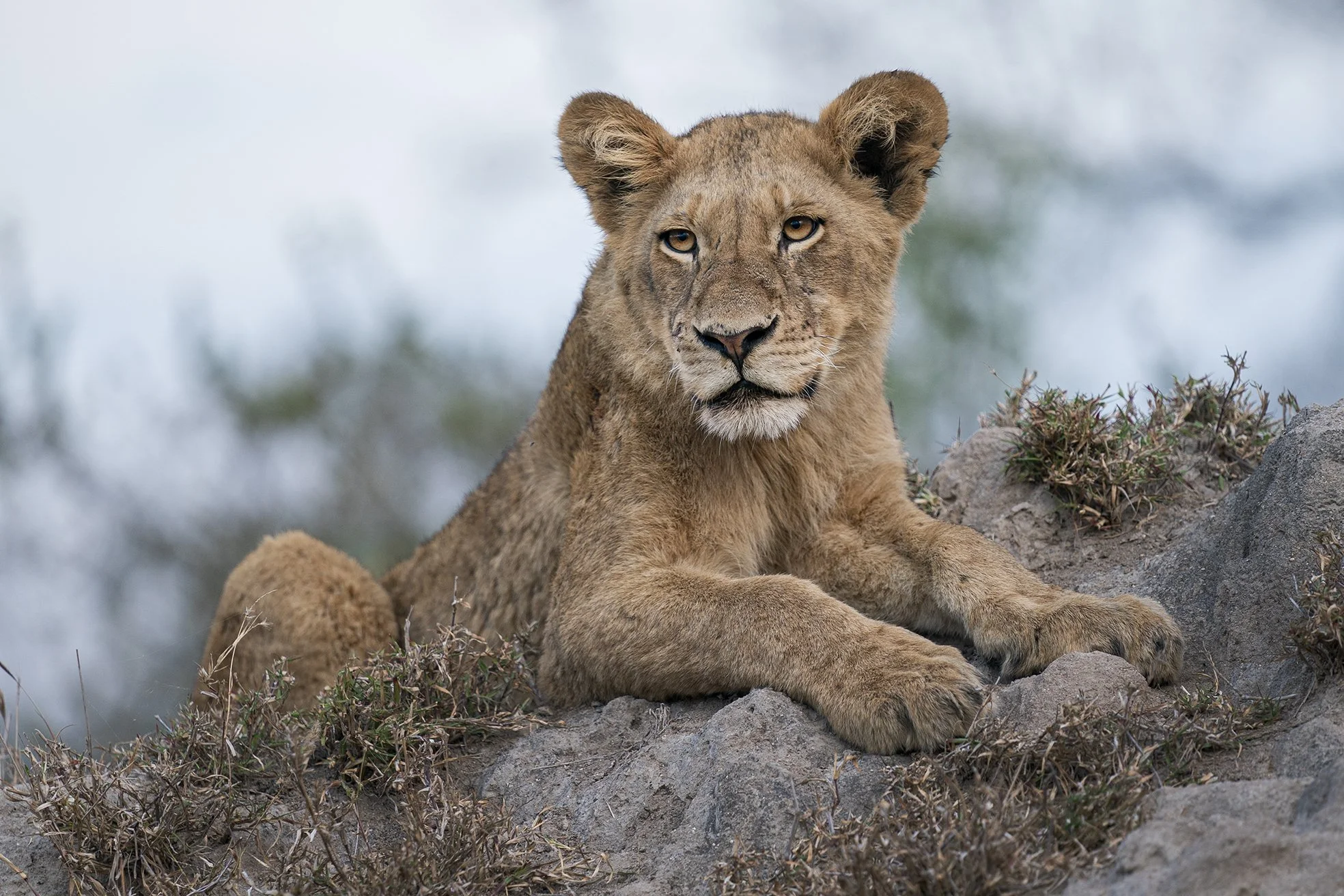
Some examples of what you can photograph in Kenya


VIEW OUR OTHER PHOTO TOURS
-
VIETNAM
-
PERU
-
LADAKH